

September 16, 2023
10am–7pm
The biggest, buggiest event of the year, BugFest educates and engages the public about science and the natural world. Museum guests participate in more than 100 exhibits, crafts, games and activities as you interact with entomologists and other scientists while learning about the fascinating world of arthropods.
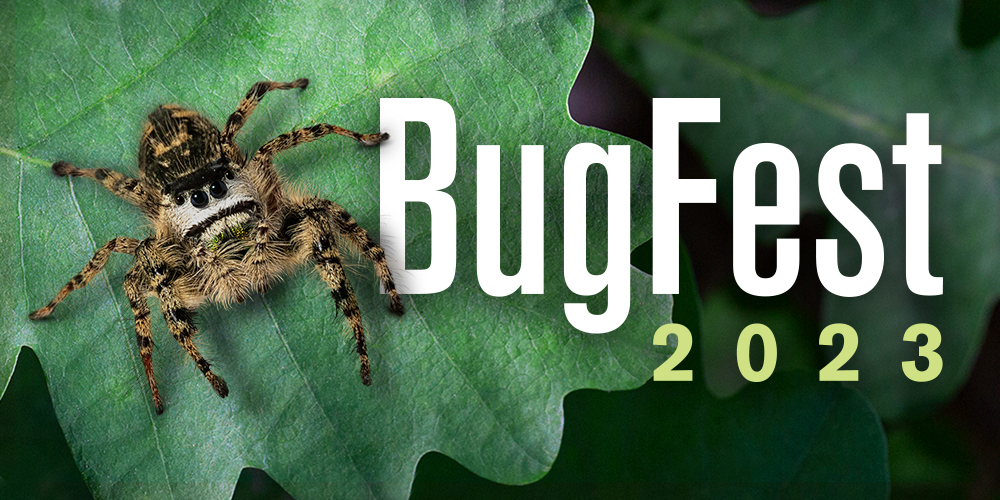
This year, BugFest spotlights the spiders!
*The deadline to request an ASL interpreter for BugFest programs has passed. Please contact accessibility@naturalsciences.org for additional information.
Join us for a special preview event at the Critter Cook-off on Friday, September 15, from 11am to noon. You can watch the cook-off in person or online here:
Critter Cook-off on YouTube.
MEMBER BENEFIT
Members receive amazing VIP benefits at BugFest! Skip the lines and get straight to the fun. Members can register in advance for priority parking and have access to the Fast Track Lane at Café Insecta. Plus, Members always FREE admission to our special exhibition Spiders: Fear to Fascination and get 10% off in our stores and cafes!
Join or renew your membership today!
16 de Septiembre, 2023
10am–7pm
El evento sobre insectos y artrópodos más grande de todo el país. BugFest pretende educar e involucrar al público en la ciencia y el mundo natural. Nuestros visitantes podrán participar en más de 100 exhibiciones, manualidades, juegos y actividades mientras interactúan con entomólogos y otros científicos, a la vez que aprenden sobre el fascinante mundo de los artrópodos.
Este año, como tema principal, BugFest destaca a las arañas.
*La fecha límite para solicitar un intérprete de ASL para los programas de BugFest ha pasado. Por favor, contacta con [http://La fecha límite para solicitar un intérprete de ASL para los programas de BugFest ha pasado. Por favor, comuníquese con accessibility@naturalsciences.org para obtener información adicional.
Únete a nosotros para una vista previa especial en el Critter Cook-off el viernes 15 de septiembre, de 11 a. m. a 12 p. m. Puedes ver la competencia en persona o en línea aquí: Critter Cook-off en YouTube.
CAMISETA GRATIS SI SE INSCRIBE / RENUEVA SU MEMBRESÍA
Inscríbase o renueve su membresía en el evento BugFest o en línea del 2 al 16 de septiembre con el código “SpiderTee23” y ¡recibirá una camiseta gratis del BugFest el día del evento! Las camisetas solo se podrán recoger en el evento BugFest.
¡Únete Hoy!
BugFest is presented by / BugFest es presentado por:

With additional support from / Con apoyo adicional de:


In-kind support for BugFest generously provided by Armstrong’s Cricket Farm Georgia, Wegmans Food Markets, Pepsi Bottling Ventures and Hampton Inn & Suites by Hilton- Downtown Raleigh.
BugFest cuenta con el generoso apoyo de Armstrong’s Cricket Farm Georgia, Wegmans Food Markets, Pepsi Bottling Ventures y Hampton Inn & Suites by Hilton- Downtown Raleigh.